"Seriously, watching today's generals discuss how to improve leadership development is a little like watching dinosaurs discuss how to evolve"
Showing posts with label TBD. Show all posts
Showing posts with label TBD. Show all posts
Monday, February 18, 2013
Comedy: Generals talking about adaptability


Tuesday, February 12, 2013
War is keeping the Army from Armying
It saddens me to hear that the Army is clawing its way back to pre-2001 priorities. I was hoping that my observations were outliers and unrepresentative of the whole.
"The entire intent of being a professional soldier is going to war and destroying the enemy. What most of us in the military have trained for -- and done -- several times. Yes, there were a lot of growing pains over the last decade, especially learning what was most important to accomplish this task. We learned: Shooting, first aid, cultural lessons -- important! Haircuts, hands in pockets, pressing uniforms? Not that important..."
TBD:Where is the garrison Army going? I worry it is heading back to spit and polish, while ignoring hard lessons of the last decade
Friday, December 21, 2012
Gentile on 'The Generals'
Colonel Gentile, a strategic bombing expertwho also was a cavalry squadron commander in Iraq in 2006, concludes that I am both simplistic and dangerous...
...He also says the book is a regression from the works of John Keegan. Well, if I have to regress from anyone, I'll take Keegan. I am not as good a baseball player as Derek Jeter, either.
The Generals gets two thumbs down
Tuesday, December 18, 2012
TBD: Soldier poets of the Great War (II)
This epitaph by H.W. Garrod, consisting of just two lines, strikes me as "soldierly" -- disciplined and brief. The second line is especially concentrated. I think it was Sen. James Webb who once observed that poetry is like combat in that poetry is compressed thought and combat is compressed action.
Tell them at home, there's nothing here to hide;Here's another soldierly quartet of lines, from F.W.D. Bendall:
We took our orders, asked no questions, died.
Sentry, sentry, what did you say
As you watched alone till break of day?
I prayed the Lord that I'd fire straight
If I saw the man that killed my mate.
Some soldierly lines of concentrated thought
Wednesday, December 12, 2012
GM Leadership
Peter Drucker, one of the great thinkers about how corporations really work, in describing the Generals Motors of the 1940s, mentions that 95 percent of all decisions were left to the heads of the company's various divisions. "Hence central management refrains as much as possible from telling a division how to do its job; it only lays down what to do."
TBD
Tuesday, December 11, 2012
TBD: West Point: How about less engineering...
...and more emphasis on negotiating skills and strategic and cultural studies?
By Luke HutchisonBest Defense department of military education reformation
When West Point was founded over 200 years ago, it was created
to fix a key problem in the Army, the lack of officers with engineering
skills. Without officers who knew how to
build roads, construct forts and fire artillery accurately -- the Army would be
completely ineffective. With no engineering programs at other American
universities and a problem that required more than basic training, Colonel
Thayer set out to make a rigorous academic program based on an engineering
curriculum. Today, West Point needs to
assess just like Colonel Thayer did over 200 years ago, what is required of its
graduates so that they will best contribute to the common defense.
Wednesday, November 7, 2012
TBD on a theme of declining empires
The British lesson of the Industrial Revolution: The drawbacks to being 1st:I am amazed by the relevance of this historical account (emphasis is mine).
One of the drawbacks to being the pioneer in the Industrial Revolution, Paul Kennedy writes in The Rise and Fall of British Naval Mastery, was that the British, being first, simply were not accustomed to competition. Hence both their industrial and social practices were encumbered, he writes, by "complacency and inefficiency."
As a result, he continued, the British educational system failed to keep pace with the Americans and Germans in churning out engineers and technologists. And even when innovators surfaced, they did not necessarily succeed. Britain was a major innovator in the steel industry, he writes, but was surpassed because its wealthy did not back innovation with investments.
Saturday, May 12, 2012
Counterpoint to CJCS
In a counterpoint to out last post about the CJCS, Robert Goldich, former senior military manpower analyst for the Congressional Research service, thinks GEN Dempsey is a knuckle-dragger without vision:
I see official remarks and documents that seem to me to be nothing more than a stringing together of contemporary pop phrases in military-strategic affairs, dispensing conventional wisdom. There seems to me to be a lack of intellectual rigor in his published statements of policy. I found his first CJCS reading list to be amazingly puerile, filled with that most suspicious of categories of written material, best sellers on general booklists.I think Goldich is an academic who's brain is getting in the way of his ability to see the world as it is.
Sunday, April 22, 2012
Constructive Criticism
.png) |
| 1940's technology |
Now the question is will more criticism make a difference? Probably not. Despite soundbites to the contrary, the Army is often happy with "good enough".
Wednesday, March 28, 2012
Army vs. Navy

From the TBD:
Should the Army be more like the Navy in holding its commanders accountable?How do we explain the huge disparity between the large number of Navy Commanders getting fired (more than 30 in 2011) and the relatively small number of Army Commanders getting fired?
There are a few common and unwritten themes on this topic:
1. A commander can delegate authority, but not responsibility. Authority refers to "who is in charge" while responsibility refers to "who is accountable."
2. A commander is responsible but very often not in control.
3. Commanders have a responsibility to ensure their subordinates are trained and can operate independently based on the commander's intent.
4. Commanders have a responsibility to set a command climate wherein subordinates will act ethically in the absence of leaders.
Monday, March 5, 2012
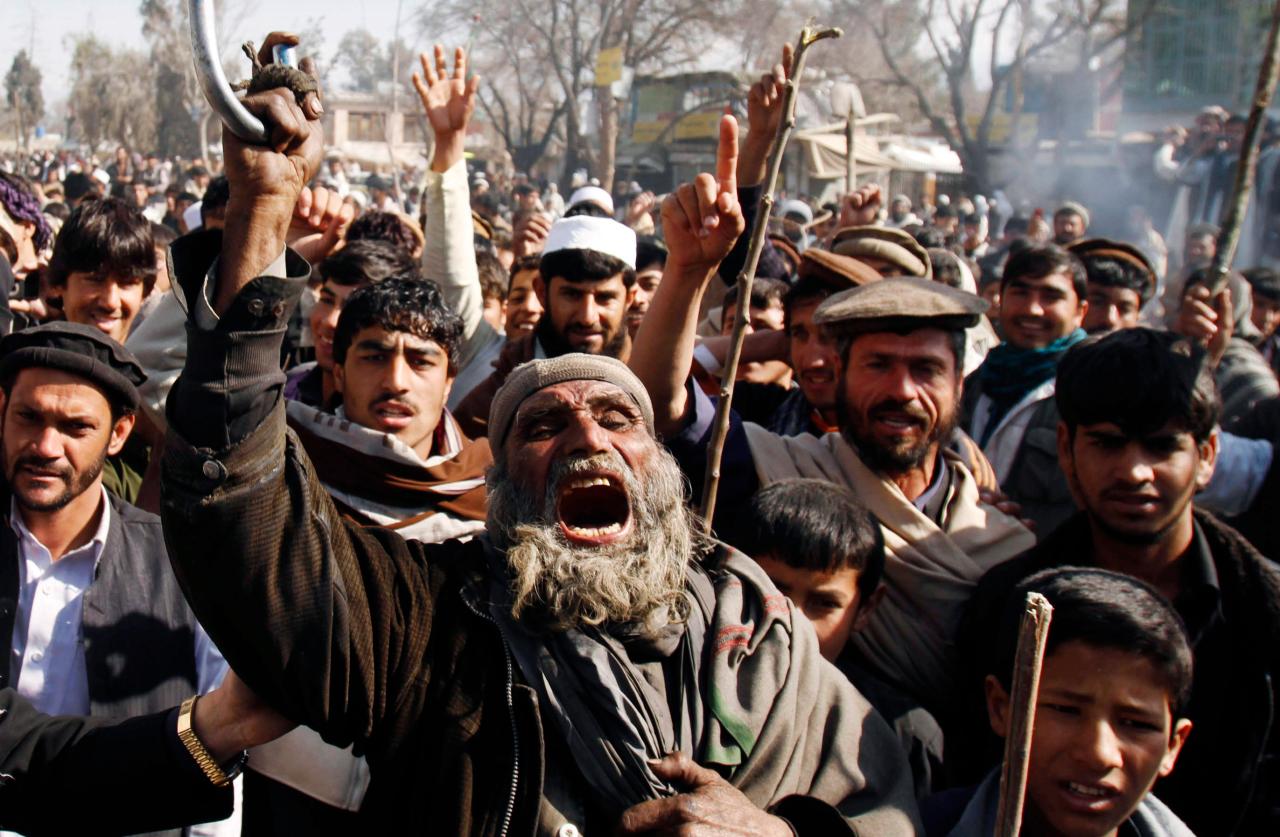
TBD: The Quran Burnings
 |
| reddogreport.com |
Monday, February 27, 2012

Tuesday, February 21, 2012
Sunday, February 19, 2012

Monday, February 13, 2012
TBD: Contractors at war
 |
| brianbrownewalker.com |
Monday, February 6, 2012
Afghanistan: The Current Fight
 |
| LATimes.com |
The problem with this is that if the U.S. Brigade Commander succeeds, he also fails.Because in this counterinsurgency, the only way you ever really move towards a "win" is if you enable the Afghans in their efforts to foster security, governance, development and the rule of law in a way that makes their efforts sustainable - meaning that after we leave, the Afghans can secure their gains and hopefully make even more progress.But to do that, you have to back away and put the ANSF and the Government of the Islamic Republic of Afghanistan (GIRoA) in the lead. You have to let them feel the weight of the responsibility of success or failure. You cannot do it for them.
Monday, January 30, 2012
Monday, January 23, 2012
Winning arguments as the CJCS

From TBD:
"when I go into a meeting to discuss policy, discuss strategy, discuss operations, plans, whatever it happens to be, he who has the best context generally prevails in the argument, not necessarily who's got the best facts. There's a difference. It's who has the best context in which those facts exist."
Sunday, January 22, 2012

Subscribe to:
Posts (Atom)